UNESCO Intangible Cultural Heritage of China
Scroll
The Textile

What Is Mud Dye Silk?

Mud dye silk, known in China as xiang yun sha, or Gambiered Silk, is one of the most extraordinary textiles in existence. It has been made in Guangdong Province since the Ming Dynasty, over 2,500 years ago, by the Hakka people of the Pearl River delta. It is not simply a fabric. It is a record of a landscape, a season, and a way of life, and it is disappearing.

The process of creating mud dye silk is unlike any other textile tradition in the world. It cannot be rushed. It cannot be replicated elsewhere. It is entirely dependent on a specific river, a specific climate, and hands that have spent a lifetime learning a single craft.

01
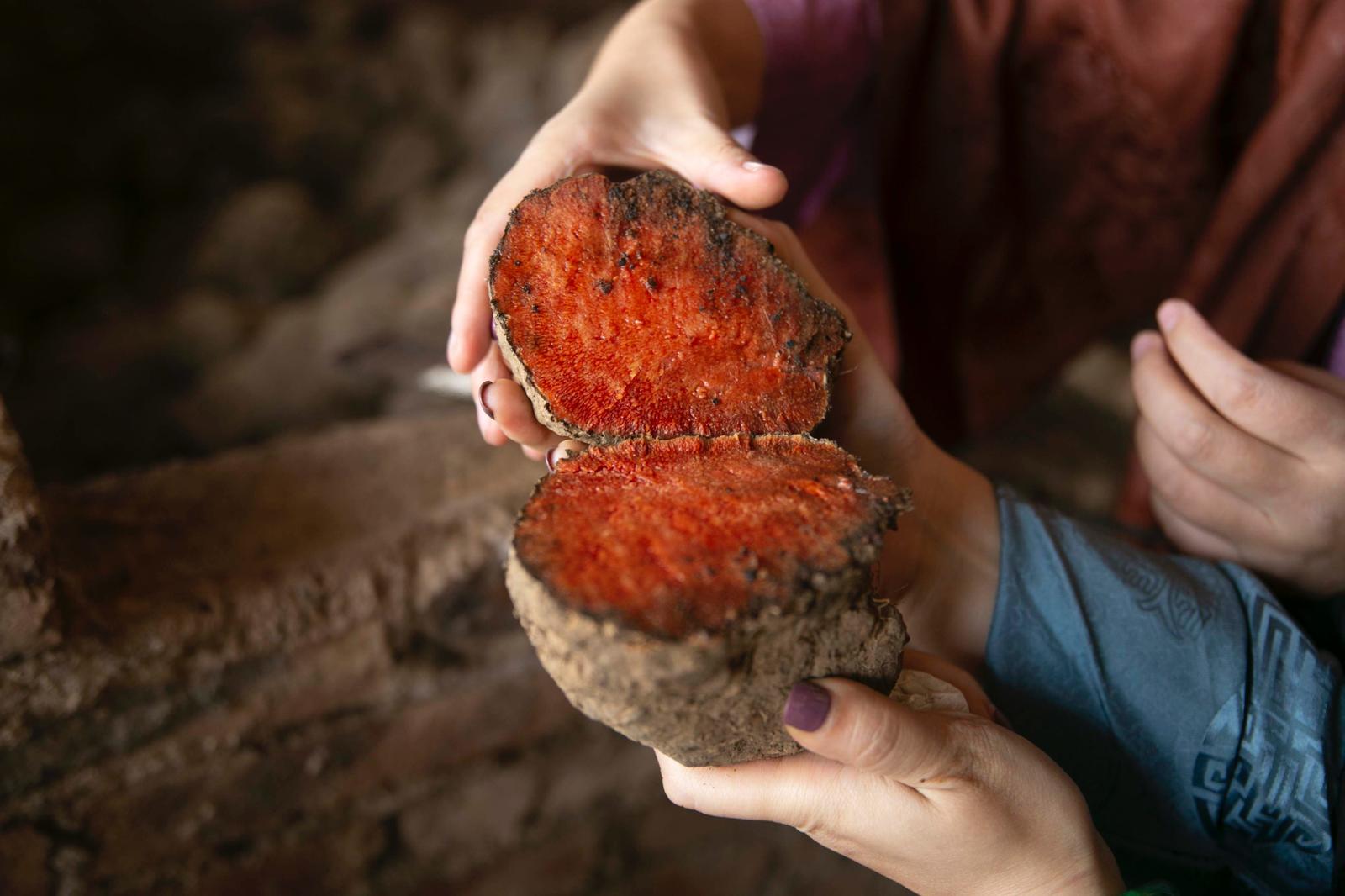
Dioscorea cirrhosa root dye
The Root

Stage One.
The Root Dye.

The process begins with Dioscorea cirrhosa, a medicinal yam root native to Guangdong, dried, ground, and simmered in large clay basins until the water turns a deep, rich amber. Raw silk is submerged and drawn out, again and again, sometimes dozens of times, until it absorbs a depth of colour.

This stage is hot, slow, and deeply physical.
02
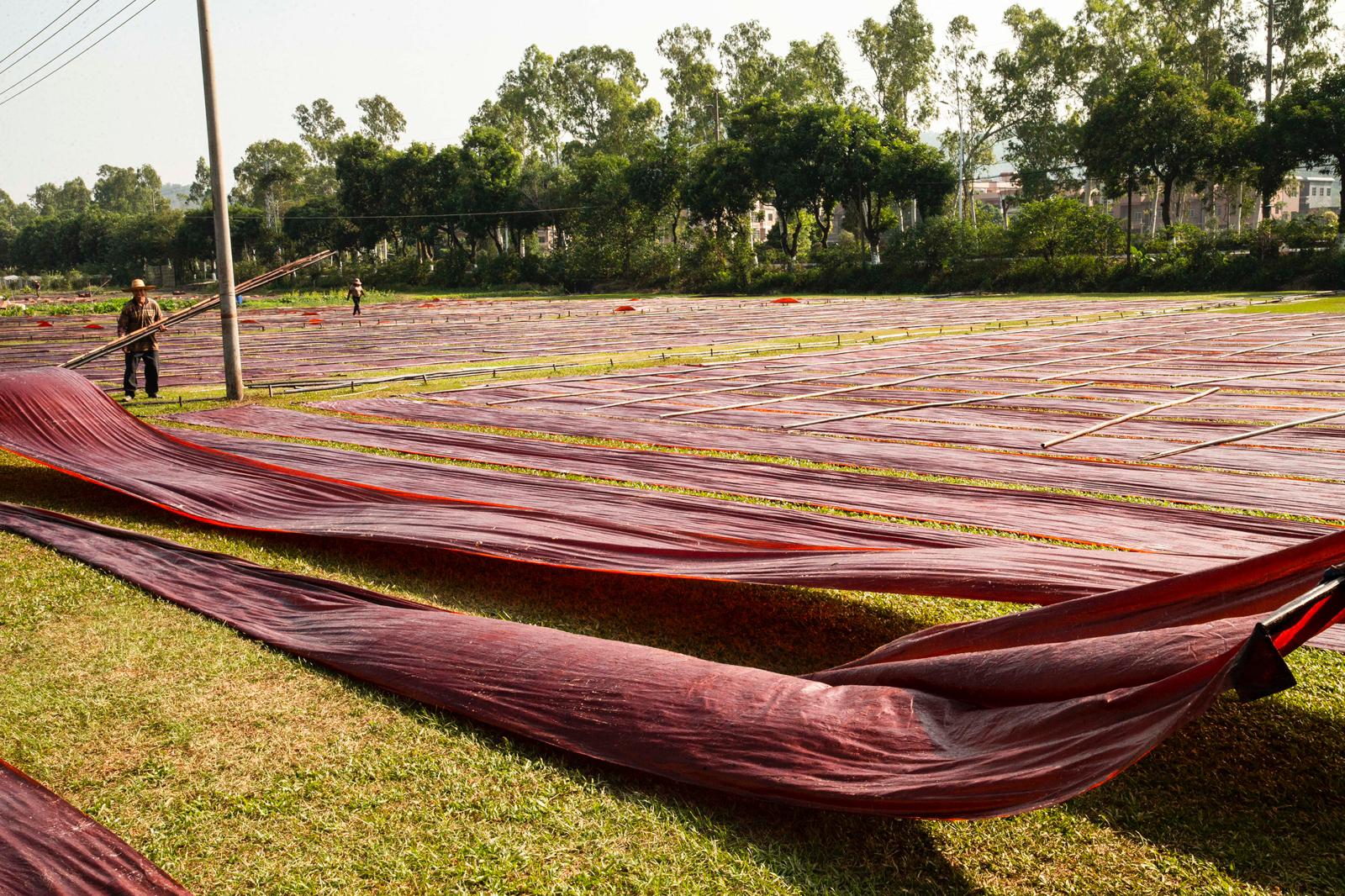
Silk drying in the sun across open fields
The Sun

Stage Two.
Drying in the Sun.

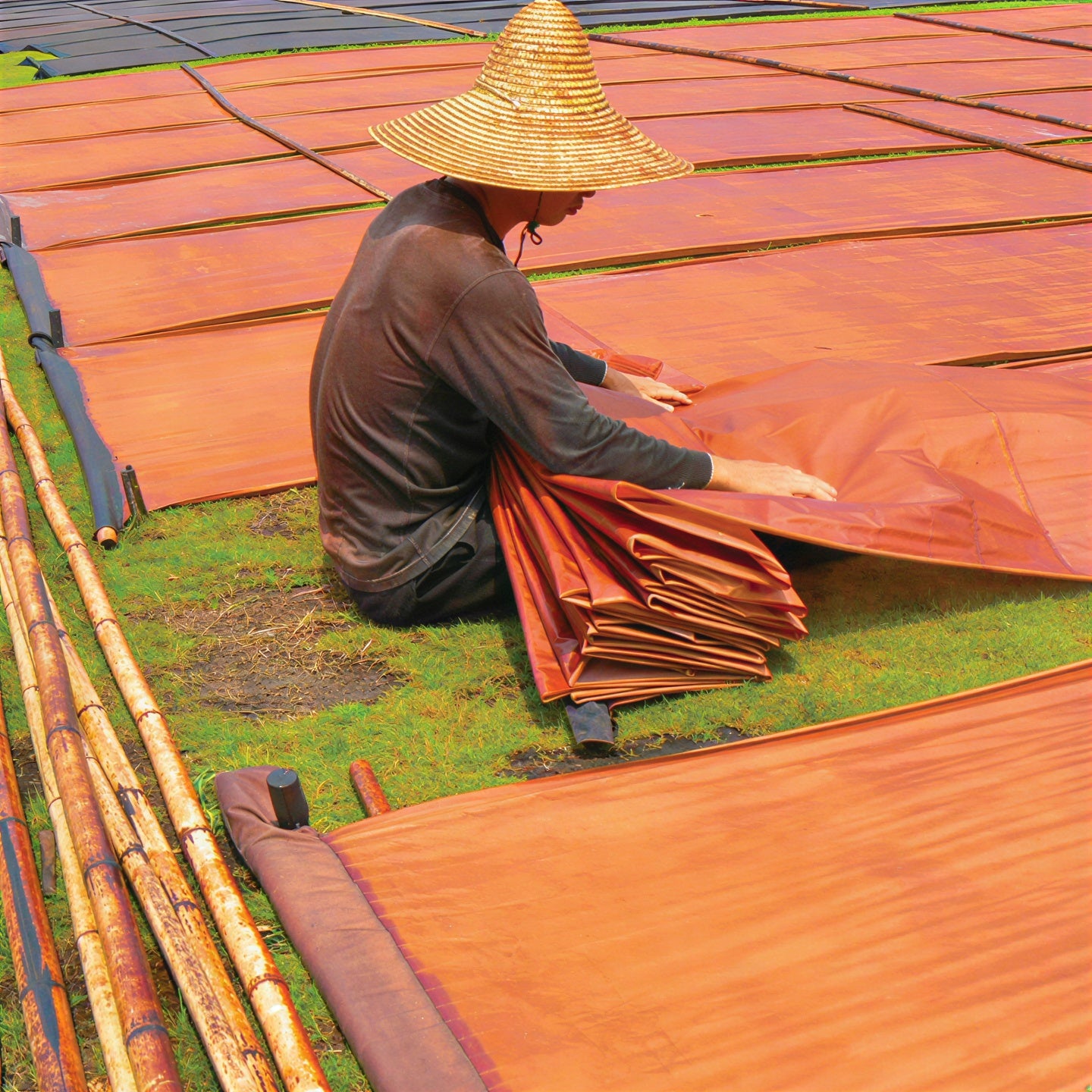
Between each dye bath, the silk is stretched flat across open fields and left to dry under the intense subtropical sun. The sunshine is not incidental. It is part of the chemistry, binding the tannin to the fibre with each cycle.

This is why the process can only happen between March and November, and why it cannot be moved indoors or to another climate.

03
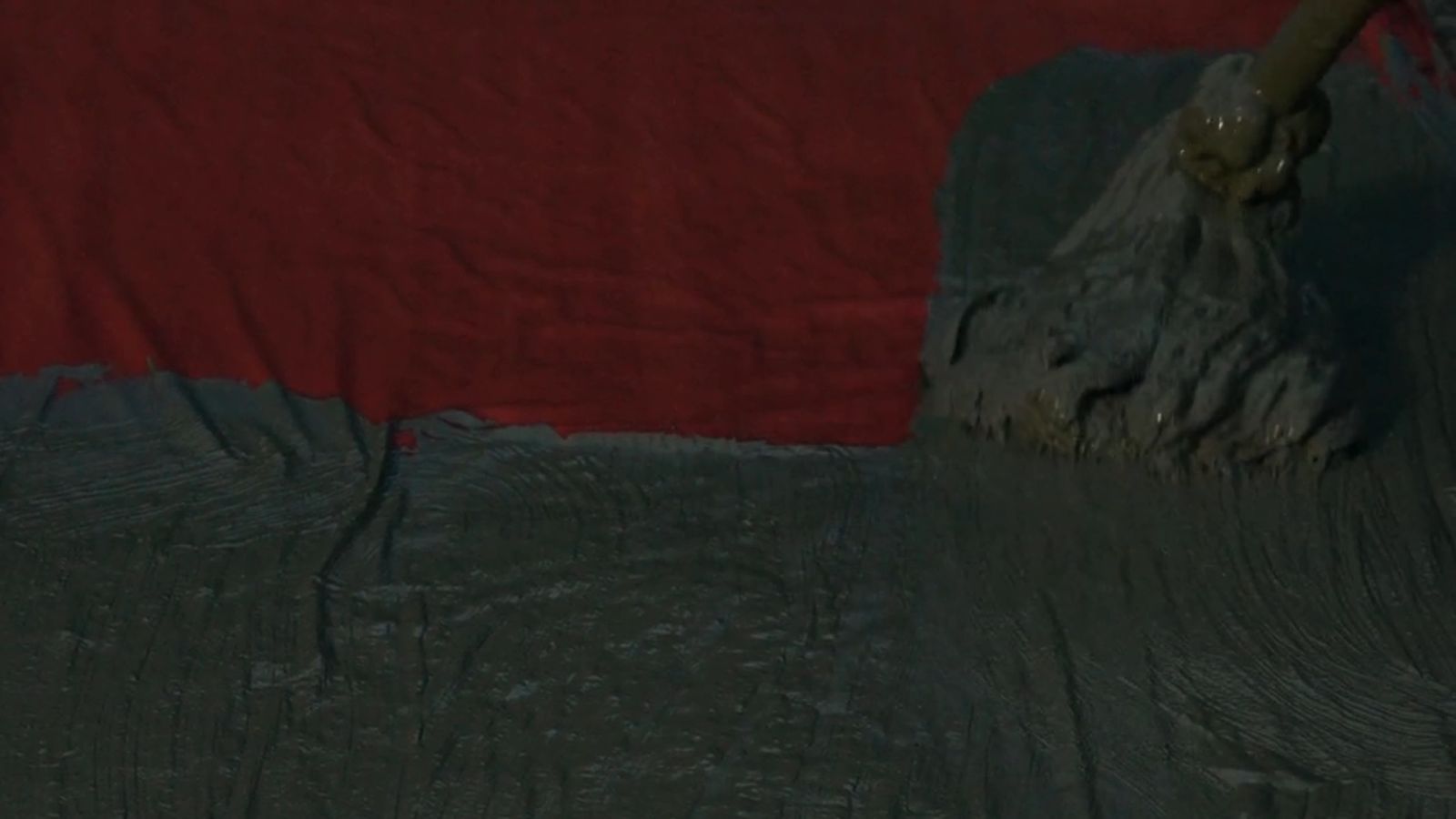
Iron-rich Pearl River mud coating silk fabric
The River

Stage Three.
The Mud.

Once the dyeing is complete, the silk is taken to the banks of the Pearl River and coated in the river's iron-rich mud. It is left to absorb, then washed, then dried again in the sun.

The iron in the mud acts as a mordant, reacting with the tannin dye to lock the colour permanently into the silk. A thin, resin-like film forms across the surface, creating the signature lacquered finish.

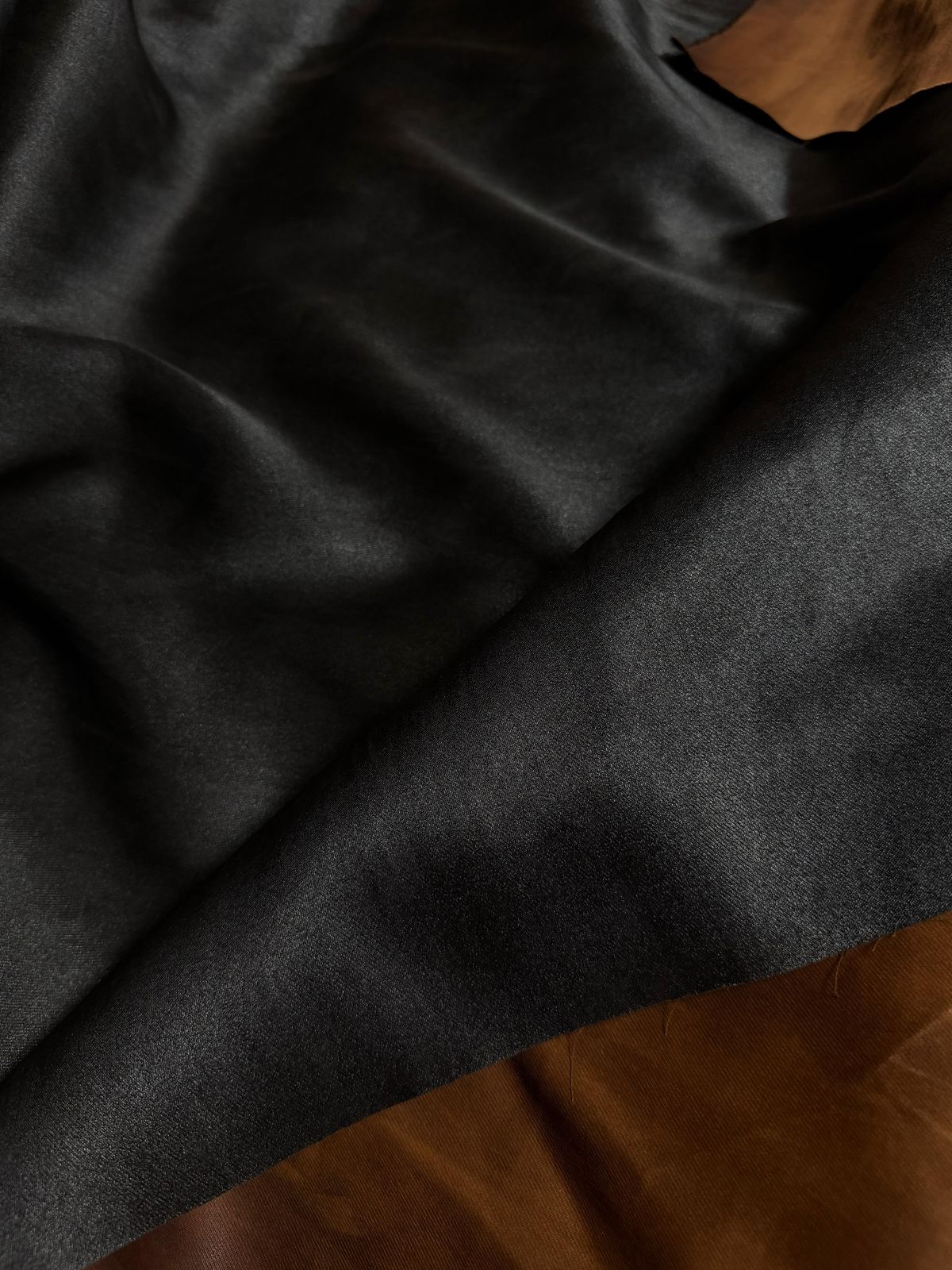
Mud dye silk fabric showing black and terracotta faces
The Fabric

What Makes It Different.

The finished fabric has two completely distinct faces. One side is a deep, lacquered black, glossy, water-resistant and easy to care for. The other is a warm, matte terracotta-orange, the colour of the earth that made it.

No two pieces are identical. The depth of colour, the tone of the reverse, the quality of the surface; all shift with the season, the river, and the judgement of the artisan. This is not a flaw. It is the point.

Artisan folding mud dye silk by the Pearl River
The Legacy

Why These Pieces
Will Not Exist Again.

The artisan who carries this knowledge is old. The tradition was not widely passed on. Climate change is altering the iron content of the Pearl River, and shifting seasons make it harder each year to complete the full cycle.

The fabric available now may be among the very last to be made by this process. When it is gone, these garments cannot be recreated.

The Founder

First to Bring It to London.

At the heart of DA LUNA is our founder and creative director, Hong, whose heritage is rooted in the Hakka community, where this fabric has been woven into daily life for centuries.

Raised in a small town in Guangdong, Hong grew up glimpsing this cloth from afar. It was treasured, rare, and reserved for those who could afford its quiet luxury. For many, it remained something to admire, never to possess.

Today, Hong reclaims that story.

By bringing this material to London for the first time, she transforms it into something both timeless and attainable, opening the door for a new generation of women to experience its beauty, wear its history, and carry its legacy forward.

To Wear
To wear mud dye silk is to wear the river, the sun, and 2,500 years of human knowledge.

These are limited pieces.
Once they are gone, they are gone.